
A Second Chance at Wild: Inside the South Florida Wildlife Center
|
From an injured bobcat’s recovery to the everyday dedication of volunteers, this local nonprofit helps South Florida’s wild neighbors find their way home.
|
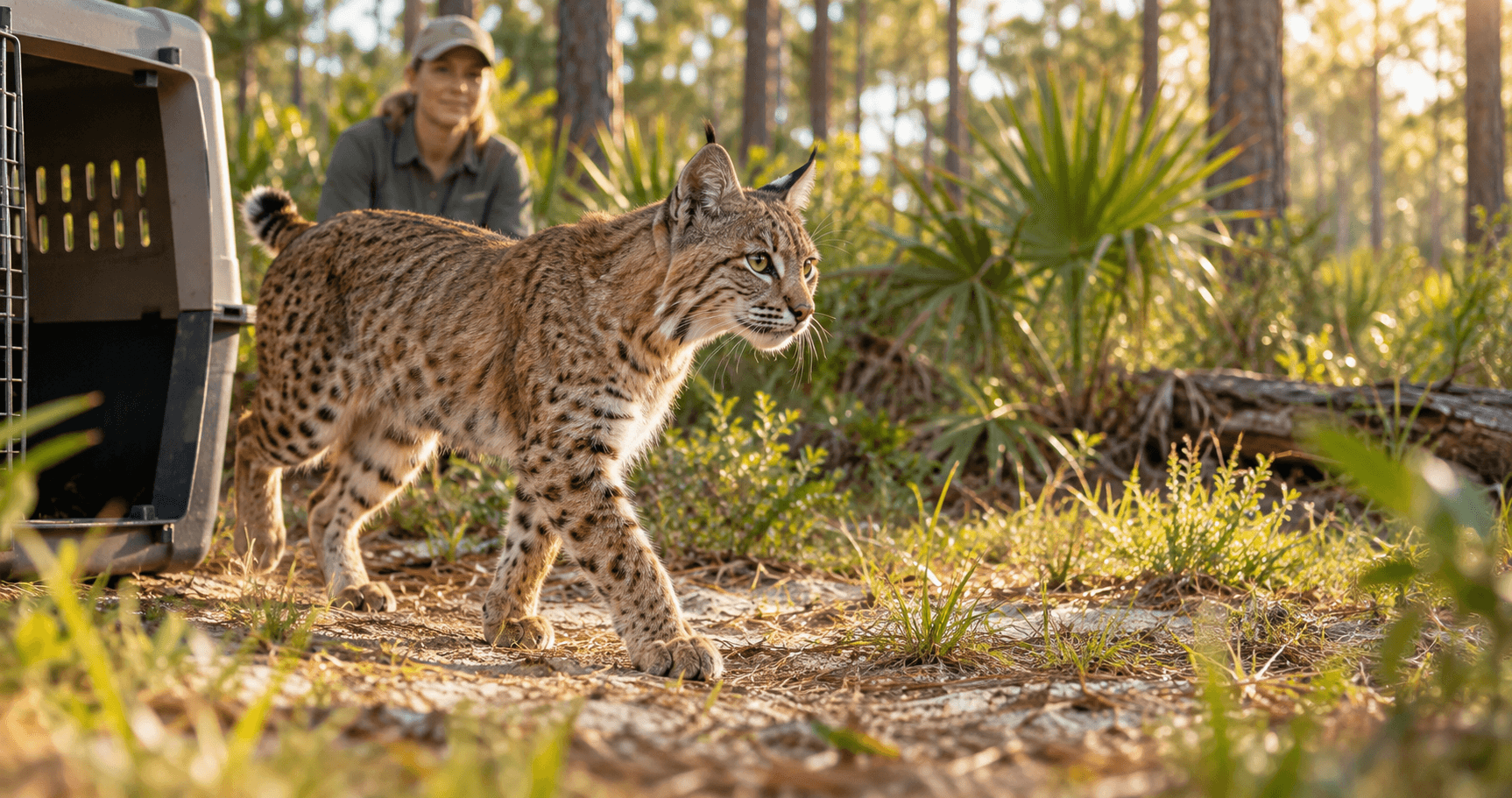
A bird taking flight. A bobcat disappearing into the brush. An animal strong enough to return to the life it was meant to live.
Those are the moments behind the mission of the South Florida Wildlife Center, a nonprofit that has cared for injured and orphaned wildlife since 1969.
Serving the tri-county area, the center combines rescue, rehabilitation, release, and education to help people coexist with the wildlife around them.
Its work offers a hopeful reminder: when an animal’s future is uncertain, a person who notices, a team with the right skills, and a community willing to help can make a difference.
One Bobcat’s Long Road Home
In a rescue story published in July 2025, the center described a young bobcat that had been struck by a vehicle in Bonita Springs. A supporter of the Conservancy of Southwest Florida found the animal and brought it to the organization’s wildlife hospital.
The bobcat had a fractured front leg and was missing two toes on one paw. Its recovery required a coordinated effort involving wildlife specialists, veterinary care, and surgery at BluePearl Pet Hospital.
After its initial treatment, the bobcat came to the South Florida Wildlife Center in Fort Lauderdale for several months of rehabilitation. Human interaction was kept to a minimum to help preserve its wild instincts.
Eventually, it met the health and mobility requirements for release. The bobcat returned to a protected habitat on Florida’s west coast, with another chance to live independently.
The happy ending was a return to the wild. Behind it were months of patient work, shared expertise, and people who believed that one animal was worth the effort.
What Happens Between Rescue and Release?
Saving an animal is only the beginning.
The center’s hospital provides examinations, diagnostic testing when needed, and treatment tailored to each patient. Recovery can take days, weeks, or months, depending on the animal and its injuries.
Rehabilitation also means preparing for life beyond human care.
The center explains that each animal’s plan reflects its species and the abilities it will need to survive. Specialized habitats support conditioning, while nursery staff care for orphaned young animals.
Whenever possible, the goal is a return home. That can include reuniting young animals with their parents or releasing recovered patients once they meet health and behavioral requirements.
There is something moving about that kind of care: helping a wild animal recover until it no longer needs you.
The People Behind the Second Chances
The center’s community includes people whose contributions rarely make headlines.
In an April 2025 story, the organization celebrated Julia, a volunteer captain who had reached 1,000 hours of service. The center described her helping staff, caring for animals, and even providing meals during especially busy days.
Her story puts a human face on wildlife rehabilitation. Alongside medical expertise, this work depends on people willing to show up consistently and take care of the everyday tasks that keep an organization going.
The center lists preparing diets, cleaning habitats, washing laundry, organizing supplies, and supporting animal care among its volunteer responsibilities. Each task contributes to the larger mission of helping wildlife recover.
Helping Our Community Understand Its Wild Neighbors
The South Florida Wildlife Center also teaches residents about wildlife and peaceful coexistence.
Its Animal Ambassador program includes animals that cannot survive independently in the wild. Through educational programming, these permanent residents help people learn about animal behavior, habitat protection, and the role wildlife plays in local ecosystems.
For anyone who has spotted an unfamiliar animal in the yard or wondered whether a young bird needs help, access to knowledgeable guidance matters.
The center advises residents to call or text 954-524-4302 when they find wildlife that may need assistance. Its admissions team responds between 9 a.m. and 4:30 p.m. The organization also cautions that young animals are not always orphaned and encourages people to ask before intervening.
One Clear Way to Help
Choose an item from the center’s official wish lists.
Visit its Wish Lists page to explore supply-giving options and check what the organization is requesting before purchasing. It is a practical way to support the work behind each recovery.
If volunteering interests you, keep the center on your radar. Its current notice says new volunteer applications are temporarily closed and are scheduled to reopen in December 2026. Check the volunteer page for updates.
A second chance can begin with one person paying attention. Helping make that chance possible is something a whole community can share.
South Florida Wildlife Center
|
0 Comments
Join the conversation
Be the first to comment
Share your thoughts above.