
Rolling in Flavor: How Food Trucks Became a South Florida Classic
|
From working-day lunch stops to outdoor gatherings, these mobile kitchens bring a world of flavor to the neighborhood. |
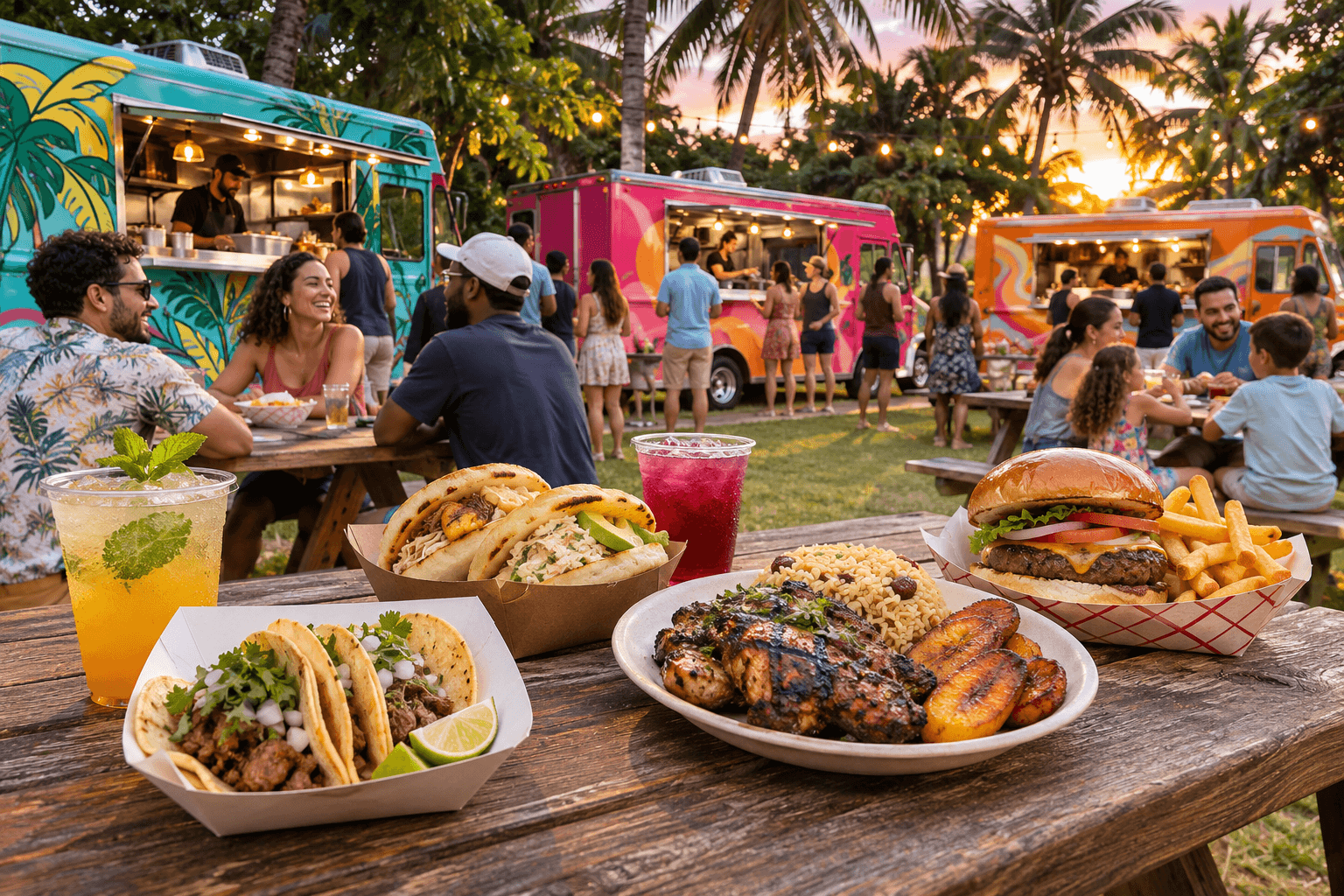
Follow the aroma of sizzling burgers, look for a row of colorful trucks, and bring an appetite for something different. A food-truck outing offers a particularly appealing kind of dining freedom: everyone can choose their own meal, try an unfamiliar flavor, and gather together afterward.
South Florida’s food-truck story combines practical beginnings with culinary creativity. Mobile vendors were feeding people long before the modern gourmet-truck movement arrived.
What changed was the experience: a quick roadside meal became something diners actively sought out, and sometimes followed across town. Local reporting documented that transformation in Fort Lauderdale as early as 2010.
Before the Buzz: Food That Went to Work
Food trucks did not originate in Florida. Their American predecessors include chuck wagons that fed cattle crews and urban lunch wagons serving working people. Both helped establish the idea behind today’s mobile kitchens: bring prepared food to the people who need it. Click here if you want to learn a bit of history on food trucks...
In South Florida, the modern movement grew against a familiar backdrop of job-site catering trucks, lunch wagons, and roadside meals.
Miami food writer Sef Gonzalez, known as Burger Beast, describes those working-day stops as the local context before a new generation of chefs and entrepreneurs began attracting diners specifically for the food.
The better-documented milestone is the emergence of South Florida’s modern gourmet food-truck scene in late 2009.
When Miami’s Mobile Kitchens Took a New Turn
Two names stand out in accounts of that early wave: Latin Burger & Taco and gastroPod.
Latin Burger & Taco rolled onto Miami’s streets in November 2009, with owner Jim Heins and burgers developed with Food Network personality Ingrid Hoffmann.
Around the same period, chef Jeremiah Bullfrog’s gastroPod brought inventive cooking to a converted 1962 Airstream trailer.
Contemporary coverage places both among the pioneers of Miami’s new food-truck movement, although accounts differ over which deserves the “first” designation.
The attraction extended beyond convenience. These mobile kitchens had recognizable personalities, distinctive menus, and food worth planning an outing around.
Early menus demonstrated just how wide the possibilities could be. Eater Miami’s 2012 guide included Colombian-influenced burgers, mahi tacos with pineapple-jalapeño salsa, lobster rolls, and desserts. A truck could specialize in comfort food, introduce a regional flavor, or experiment with an unexpected combination.
Social Media Helped Put Dinner on the Map
A moving kitchen needs a way to tell customers where to find it. In the early years, Facebook, Twitter, and local food blogs helped fill that role.
Heins told Miami New Times that, without a marketing budget, he learned to use social media to announce Latin Burger’s stops. Burger Beast also posted the truck’s locations, helping connect the business with hungry readers.
That connection reached Broward quickly. A 2010 Broward Palm Beach New Times feature described customers waiting for Latin Burger near Fort Lauderdale’s Southeast 17th Street and Cordova Road after seeing its location announced on Twitter.
The article captured an important change: customers were building a following around a mobile kitchen much as they might around a favorite neighborhood restaurant.
Finding lunch had become part of the fun: From a Lunch Stop to a Community Gathering
Food-truck roundups added another dimension. Bringing several vendors together made the outing about more than one menu.
Hollywood’s archived city calendars document food-truck evenings at ArtsPark at Young Circle in 2013, inviting visitors to bring chairs, blankets, and an appetite. Listed vendors included taco trucks, grilled-cheese specialists, pasta, and desserts, a practical solution for groups with very different cravings.
Fort Lauderdale developed its own gathering tradition
Riverwalk’s account of Food In Motion traces the event to 2013 and describes a mix of food, drinks, artisan shopping, and a social atmosphere.
These documented examples help explain the trucks’ staying power: dinner could also be a picnic, a chance to browse local vendors, or an evening spent catching up with friends.
A World of Flavors, One Stop at a Time
Variety is central to the appeal. Burger Beast’s current guide illustrates the range with vendors associated with Venezuelan food, Caribbean cooking, Greek gyros, tacos, cheesesteaks, grilled cheese, and burgers.
Those examples represent different businesses across the scene; they are not a promise that every gathering offers every cuisine.
For diners, that range creates an inviting way to explore. A familiar burger can sit alongside a dish someone has never tried. One person can choose something spicy, another can seek comfort food, and someone else can save room for dessert.
It also leaves space for both tradition and experimentation. Some vendors build their identity around a particular cuisine; others reinterpret familiar foods. Ms. Cheezious, for example, launched in 2010 with grilled cheese at the center of its concept, a reminder that an everyday favorite can become the foundation of a distinctive mobile-food business.
Small Kitchens, Serious Businesses
Behind the colorful exterior is an owner making decisions about ingredients, equipment, staffing, and where to serve next. In its reporting on South Florida operators, WLRN explored how trucks could provide a starting point for restaurateurs and how some owners later expanded into permanent restaurants.
Others preferred to keep their businesses mobile. The format offered different paths rather than a single definition of success.
Florida’s mobile-food culture also reaches beyond the Miami gourmet boom
A Southern Foodways Alliance oral history documents how Tampa’s Donna and Danny Richards continued a family devil-crab tradition through a converted trolley used as a food truck in 2013.
Their story shows how a mobile kitchen can preserve local food heritage as well as introduce something new.
Why They Feel Like a South Florida Classic
“Classic” is an editorial description here, rather than an official designation. But the history supports the sentiment: South Florida has been gathering around this modern generation of food trucks since late 2009, with documented Broward events extending back more than a decade.
Their enduring appeal comes through in those stories: distinctive food, recognizable owners, room for different tastes, and an informal setting that encourages people to linger.
A food truck can make dinner feel like a small discovery
Sometimes it introduces a new cuisine. Sometimes it delivers a familiar favorite. And sometimes the best part is that everyone gets to choose something different before meeting back together.
That combination of flavor, independence, and shared experience helps explain why food trucks have earned a lasting place in South Florida’s dining culture.
Planning an outing? Explore the Lauderdale Up Close food trucks section here, and scroll down to see all the options. |
0 Comments
Join the conversation
Be the first to comment
Share your thoughts above.